Pour Less, Learn More: The Case for the Half Measure
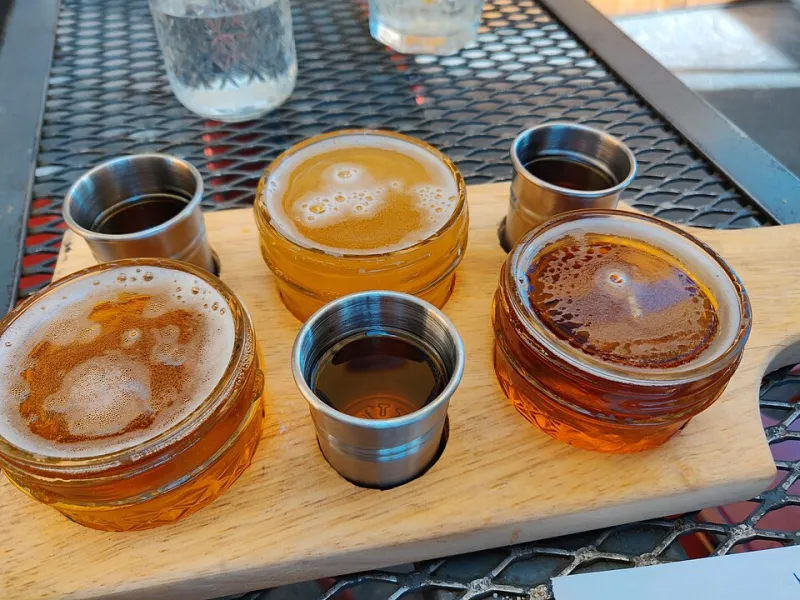
Photo: Mshuang2, CC0, via Wikimedia Commons
Walk into almost any American taproom and the menu offers a choice between a pint and a larger pint. The format is so entrenched that it rarely registers as a decision anyone made. It was, though, and not very long ago, and it has quietly shaped what Americans are able to taste.
This is an argument for the half measure: the four-ounce pour, the five-ounce tasting glass, the flight, the 375-milliliter bottle, the split. Not as a novelty, not as a diet strategy, but as the single most useful piece of service design available to a craft beverage producer or bar that genuinely wants people to understand what they are drinking.
The Pint Is Not a Neutral Container
The shaker pint is the workhorse of American drinking, and it began life as a cocktail mixing tin. It was adopted for service because it is cheap, stackable, durable, and easy to brand — all excellent reasons that have nothing whatsoever to do with flavor. It has no stem, so the hand warms the bowl. It has a wide, open rim that dissipates aroma. Its sixteen ounces of surface area push carbonation out quickly.
Now multiply that by strength. A sixteen-ounce pour of a nine-percent beer contains roughly 1.4 ounces of pure alcohol — about two and a half standard drinks — delivered in a vessel engineered to hide the alcohol and flatten the aroma. A guest drinking that is not tasting a brewery's work. They are surviving it.
Anyone who has ordered a flight and found the third sample indistinguishable from the second has met a related problem from the other direction: palate fatigue. The palate is a limited instrument. It desensitizes, especially to bitterness and to alcohol heat, and it does so faster than most drinkers realize.
What a Small Pour Buys the Curious
The primary benefit is range. Four half-pours let a drinker compare a pilsner against a saison against a barrel-aged wild ale against a dry cider, all within the same coherent window of attention, while the palate is still fresh enough to notice the differences. That comparison is where learning happens. Tasting notes in a glass are not information; tasting notes next to another glass are.
Producers should care about this for self-interested reasons. A drinker who has compared four of your products is a drinker who has developed a vocabulary for what you do, and the person who can describe your cider to a friend is worth more than the person who nursed one pint and left.
The Economics Nobody Talks About
There is a persistent assumption in bar management that smaller pours mean smaller revenue. Occasionally true, often false.
Consider what happens to the unfinished pint — the last three ounces poured down the drain because the guest got a phone call or lost interest, the sampler tray abandoned on the rail. Every half-drunk vessel is wasted inventory. A half-pour program tends to reduce that waste, and it nearly eliminates the abandoned second round.
Then there is the discovery effect. Flights are the cheapest customer acquisition tool in the building. A four-glass flight at a sensible price routinely results in a bottle or a four-pack leaving the premises, and packaged sales carry better margins than draft. The half-pour is not a loss leader for draft; it is a funnel for retail.
The Objections, and What They Are Really About
One objection comes up more than the others: small pours look stingy. The answer is presentation. A four-ounce pour in a properly scaled tasting glass, with a printed note card or a server who can explain what is in it, reads as curation. The same four ounces in a full-sized pint glass reads as disappointment. Size the vessel to the serving. This is a solved problem in every wine-producing country on the planet.
A related objection is price. Guests are remarkably willing to pay a fair per-ounce rate for a small pour, provided the pricing is transparent and the ladder is coherent. What they resent is paying premium rates for volume they did not want.
The last objection is that flights are for tourists. This one is worth taking seriously and then rejecting outright. The most knowledgeable beverage professionals in the world work in three-ounce formats. Copitas, tasting glasses, and splits are not novelties — they are the tools of people who take the subject seriously.
How to Run It Well
Three practical notes for anyone considering a smaller-format program.
First, invest in real glassware. A half-pour in a shrunken pint is a worse experience than a full pint. The whole argument depends on the vessel doing its job.
Second, build a legible price ladder. Four ounces, eight ounces, sixteen ounces — if the per-ounce rate declines with volume, guests can see that the small pour is a service, not a penalty.
Third, write it down. A flight with no explanation is just a lot of small glasses. A flight with names, origins, and two sentences of tasting context is a syllabus, and drinkers remember syllabi.
What We Are Asking For
The American craft beverage industry has spent twenty years perfecting fermentation, orchard management, barrel programs, and packaging design. It is time to apply the same rigor to the question of how much liquid lands in front of a guest.
Pour less. Pour it in something designed for it. Pour three things side by side instead of one thing in volume. The drinker who tastes four products and remembers them will come back. The drinker who was handed a pint and a pretzel, more often than not, will not.