Patience in the Cold: Why Serious Craft Producers Are Treating Cold Extraction as a Fine Art
There is a particular kind of discipline required to make something slowly when faster alternatives exist. Cold extraction — the process of steeping coffee grounds or tea leaves in cold or room-temperature water over an extended period — demands exactly that discipline. Where hot brewing delivers results in minutes, cold steeping asks for hours, sometimes days. What it offers in return is a flavor profile of remarkable smoothness, structural complexity, and expressive nuance that hot extraction cannot reproduce.
For much of its recent commercial history, cold brew coffee was understood primarily as a caffeine delivery mechanism — stronger than iced coffee, smoother than a chilled espresso, convenient for the on-the-go consumer. That understanding is incomplete. In the hands of serious craft producers, cold extraction is not merely a production method. It is a philosophy — a commitment to allowing time, temperature, and water chemistry to do work that heat and speed would obscure.
The Chemistry of Cold Extraction
To appreciate why cold extraction produces a fundamentally different beverage than hot brewing, it is necessary to understand what heat actually does to coffee or tea during extraction. Hot water is an aggressive solvent. It dissolves soluble compounds rapidly and indiscriminately — capturing not only the desirable flavor compounds but also acids and bitter phenolic compounds that, in excess, create the sharp, astringent character associated with over-extracted or poorly handled hot coffee and tea.
Cold water, by contrast, is a selective solvent. Its lower energy state means it extracts compounds more slowly and, crucially, more selectively. Many of the acids and bitter compounds responsible for harshness in hot-brewed coffee are less soluble at low temperatures, meaning they remain largely undissolved in a cold extraction. The result is a beverage with lower perceived acidity, reduced bitterness, and a structural sweetness that does not come from added sugar but from the natural sugars and non-acidic flavor compounds that cold water draws forward.
For tea, the dynamics are similar but carry additional complexity. The tannins responsible for the astringency of a strongly brewed black tea are significantly less soluble in cold water, allowing the more delicate aromatic compounds — the florals, the stone fruit notes, the grassy or umami elements depending on variety — to emerge with unusual clarity.
Water Chemistry: The Variable That Separates Good from Exceptional
Among the variables that craft producers manipulate in cold extraction, water chemistry is perhaps the most consequential and least discussed in consumer-facing contexts. Water is not a neutral medium. Its mineral content, total dissolved solids, and pH all influence which flavor compounds are extracted from coffee or tea and how those compounds are perceived on the palate.
Magnesium, for example, is known to enhance the extraction of certain aromatic compounds in coffee, contributing to perceived brightness and complexity. Calcium, present in varying concentrations depending on water source, affects mouthfeel and can either support or suppress certain flavor notes. Water that is too soft — low in dissolved minerals — produces flat, thin extractions. Water that is too hard can introduce off-flavors or interfere with the beverage's intended character.
Some of the most technically serious cold brew producers in the United States have moved to water customization, using reverse osmosis systems to strip their source water to a near-pure baseline and then reintroducing specific minerals at precise concentrations calibrated to their particular coffee or tea. This level of control was, until recently, the province of competitive baristas and laboratory researchers. Its migration into commercial craft production signals just how seriously the category is being taken.
Contact Time, Temperature, and the Spectrum of Extraction Styles
Cold extraction is not a single method but a spectrum of approaches, each producing a distinct flavor expression. The two primary variables — contact time and temperature — interact in ways that reward careful experimentation.
Room-temperature steeping (sometimes called ambient brew or slow drip at room temperature) proceeds more quickly than true cold extraction and tends to produce a bolder, slightly more acidic result. Producers who favor this approach often cite greater aromatic expressiveness as a benefit, arguing that certain volatile compounds responsible for brightness and complexity dissipate in the refrigerator.
Refrigerator steeping at temperatures between 35 and 40 degrees Fahrenheit slows extraction considerably, often requiring 18 to 24 hours for coffee and up to 12 hours for delicate teas. The flavor profile is typically smoother and more integrated, with reduced acidity and a longer, more lingering finish.
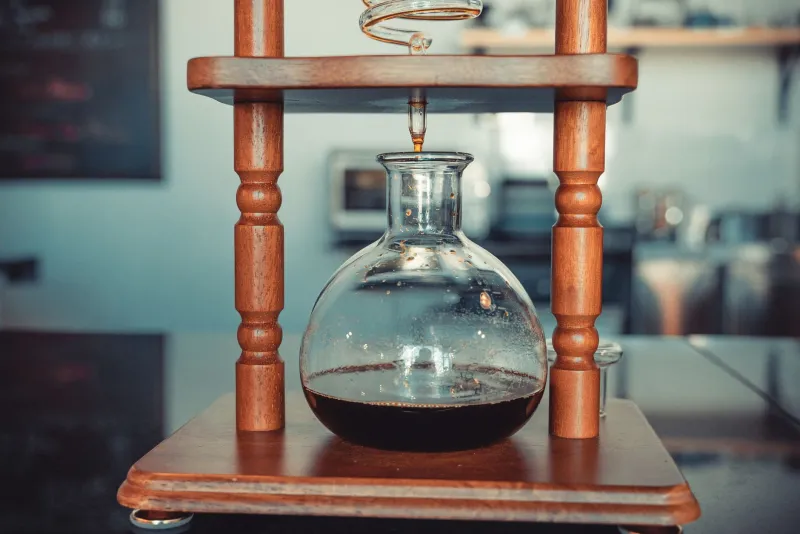
Immersion versus slow drip represent a further distinction. Immersion cold brew — in which grounds or leaves remain in contact with water for the full steeping period — produces a full-bodied, concentrated result. Slow drip systems, which allow cold water to pass gradually through a bed of coffee grounds over many hours, produce a cleaner, more transparent expression that many connoisseurs find more analytically interesting.
Producer Innovations Worth Knowing
Across the United States, a number of craft cold brew and cold-steeped tea producers are pushing the category's boundaries in ways that merit attention from discerning consumers.
Some specialty coffee roasters have begun releasing single-origin cold brew expressions — products where a specific farm's coffee, processed in a specific way, is cold-extracted to highlight the terroir of that particular lot. The approach mirrors what serious wine producers do with single-vineyard releases, and the results can be genuinely revelatory. A washed Ethiopian coffee cold-brewed with properly mineralized water can express jasmine, bergamot, and stone fruit with a precision that hot brewing would collapse into generalized brightness.
In the tea world, craft producers working with high-grade Japanese gyokuro, Taiwanese high-mountain oolongs, and first-flush Darjeeling are discovering that cold extraction amplifies the most delicate aspects of these premium teas in ways that hot brewing cannot. The umami character of shade-grown gyokuro, for instance, becomes particularly pronounced in cold extraction — yielding a beverage of extraordinary savory depth.
Recommendations for the Discerning Consumer
For those who wish to engage with cold extraction seriously — whether as a home practitioner or as an informed consumer of craft products — a few principles are worth keeping in mind.
Seek out producers who are transparent about their process. Steeping time, water source, extraction temperature, and coffee or tea origin are all meaningful data points. A producer willing to share these details is, in most cases, a producer proud of their craft.
Approach cold brew and cold-steeped tea with the same sensory attention you would bring to a fine wine or spirit. Allow the beverage to warm slightly before tasting — extreme cold suppresses aromatic perception. Note the acidity, the body, the finish, and the aromatic expression. These are complex beverages. They deserve complex attention.
At River Leaf Beverages, we have long believed that patience is among the most undervalued virtues in the craft beverage world. Cold extraction, practiced with rigor and care, is patience made tangible — and the results, for those willing to taste carefully, are among the most quietly extraordinary experiences the category has to offer.