From the Forest Floor to the Flask: How Native Botanicals Are Reshaping American Craft Spirits
For much of the twentieth century, American spirits aspired to a kind of placelessness. Gin botanicals arrived from overseas. Whiskey aging focused on barrel chemistry rather than regional grain character. Even the water used in production was rarely treated as an ingredient worthy of discussion. That era is ending. Across the United States, a cohort of craft distillers is making a deliberate, philosophically motivated turn toward the hyper-local — sourcing ingredients from the hillsides, riverbeds, and farms within view of their distillery windows.
The movement draws an unmistakable parallel to what chefs accomplished over the past two decades with the farm-to-table philosophy. Yet in the spirits world, the stakes are arguably higher. When a botanical is distilled rather than simply cooked, its essential character — its oils, its volatile compounds, its aromatic identity — becomes the dominant voice in the finished product. There is nowhere to hide. Every ingredient must earn its place.
What Terroir Means When the Ingredient Is Distilled
The concept of terroir, long the province of wine, describes how a place — its soil composition, its microclimate, its elevation, its water — expresses itself through an agricultural product. Applying that framework to spirits requires a slight but important adjustment. In winemaking, the grape itself carries the terroir directly into the bottle. In distillation, the producer must make deliberate choices about which local elements to amplify and how the production process will honor or obscure their character.
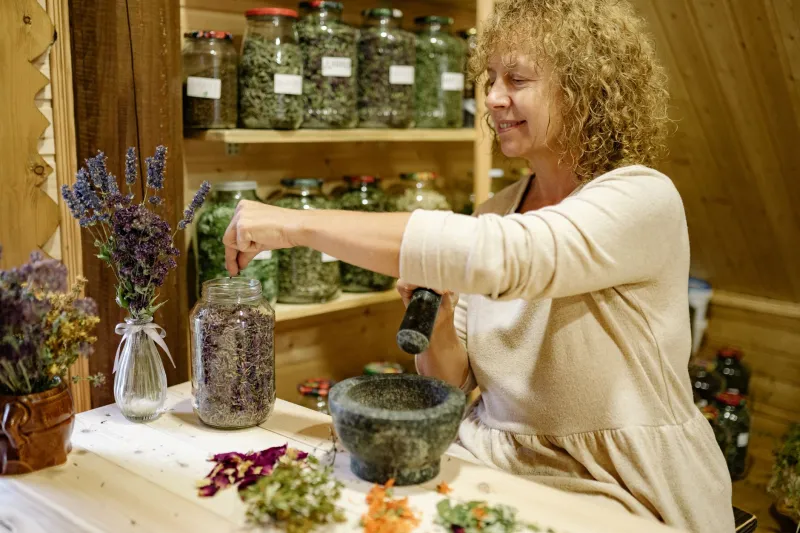
Some distillers pursue terroir through grain sourcing, working with heritage varieties of corn, rye, or barley grown in specific microclimates and milled on-site to preserve freshness. Others concentrate on botanical selection, replacing the juniper and coriander of classical gin production with local analogues — Eastern red cedar berries in Virginia, Utah juniper in the Mountain West, or wax myrtle along the Gulf Coast. Still others incorporate foraged elements: spruce tips, wild bergamot, pawpaw fruit, or sumac, each contributing flavor profiles that no catalog supplier could replicate.
The water, as this publication has explored previously, plays an equally consequential role. Distillers drawing from limestone aquifers, glacial snowmelt, or mineral-rich springs are increasingly treating their water source as a point of differentiation rather than a utility.
Profiles in Place: Producers Doing It Differently
In the hill country of central Texas, several craft distillers have begun incorporating native Texas juniper — often dismissed as an invasive nuisance by ranchers — into small-batch gins. The resulting spirit carries a resinous, slightly medicinal quality that distinguishes it sharply from London Dry style expressions. These producers have reframed a regional challenge as a regional asset, and the flavor profile is entirely their own.
In the Pacific Northwest, distillers have long had access to one of the most botanically diverse temperate rainforests on the continent. Douglas fir tips, harvested in early spring when the growth is tender and bright, contribute a citrusy, balsamic note to gins and aquavits that no imported ingredient can approximate. Producers in Oregon and Washington have built brand identities around this single seasonal ingredient, releasing limited expressions timed to the spring harvest.
Appalachia presents perhaps the richest opportunity of all. The southern mountain region harbors extraordinary botanical diversity — ramps, spicebush, black walnuts, pawpaws, and dozens of native herbs — alongside a deep tradition of small-scale distillation. Contemporary craft producers in North Carolina, Tennessee, and Kentucky are synthesizing that heritage with modern technique, creating spirits that function almost as ethnobotanical documents of their region.
The Technical Demands of Local Sourcing
Working with hyper-local and foraged ingredients is not simply a marketing decision. It imposes genuine technical demands that distinguish serious practitioners from those merely adopting the aesthetic. Wild-harvested botanicals vary in potency from season to season and harvest to harvest. A distiller relying on foraged spicebush berries must develop an intimate understanding of how their flavor compounds behave under heat, how they interact with base spirit character, and how seasonal variation affects the final product.
Many producers have responded by building close relationships with regional foragers, farmers, and botanists. Some have established their own growing programs, cultivating native plants in controlled conditions to ensure consistency without sacrificing authenticity. This level of integration between farm and still represents a meaningful evolution — one that positions the craft distiller less as a manufacturer and more as a steward of regional agricultural heritage.
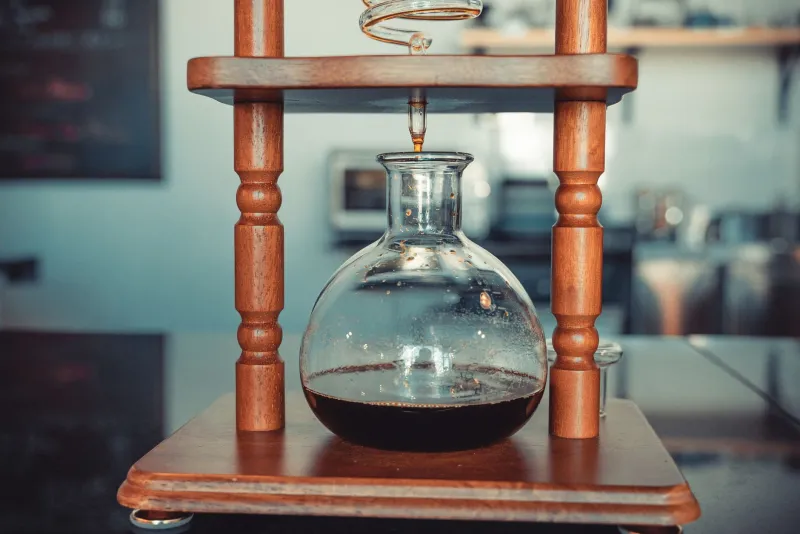
The fermentation and distillation choices made downstream of ingredient sourcing matter just as much. A pot still will preserve more of the botanical's aromatic complexity than a column still. A lower distillation proof will carry more congeners — the flavor compounds that give a spirit its character — into the final product. These are not incidental decisions. They are the craft.
Why This Matters for the Discerning Drinker
For consumers who approach spirits with the same curiosity they bring to natural wine or single-origin coffee, the emergence of place-driven American spirits represents an extraordinary opportunity. These are beverages that reward attention. A gin made with Texas juniper and Hill Country limestone water does not merely taste different from a London Dry — it tells a story that could not have been told anywhere else on earth.
At River Leaf Beverages, we believe that the finest craft drinks are those that render a place legible through the act of tasting. The American botanical spirits movement is doing precisely that — turning the landscape into language, and the flask into a vessel for genuine geographic identity. For the discerning palate, there has rarely been a more compelling moment to explore what this country actually tastes like.