What's in the Water: The Hidden Ingredient Defining Your Craft Beverage Experience
Photo: Stark & Horton -- Photographer, Public domain, via Wikimedia Commons
Consider the following: two master tea blenders, working with identical leaves sourced from the same estate, brew their respective cups using water drawn from different American cities. The resulting teas, despite sharing every other variable, will taste meaningfully different. One may present brighter, more floral top notes. The other might carry a rounder, mineral-forward depth. Neither is wrong. But they are not the same.
This is the reality that hydrogeologists, master tasters, and an increasing number of craft beverage producers have been quietly discussing for years, even as the broader public remained largely unaware. Water is not a neutral medium. It is an active participant in flavor creation, and the specific mineral profile of any given water source leaves a discernible signature on everything it touches.
At River Leaf Beverages, we believe that a truly informed palate begins with understanding what is in the glass before anything else is added. This feature is our attempt to illuminate that foundational subject.
Water as a Flavor System
From a scientific standpoint, water is rarely the pure H₂O of a chemistry textbook. Groundwater and surface water alike absorb minerals as they pass through geological formations — calcium, magnesium, sodium, bicarbonate, sulfate, and silica among them. These dissolved solids are measured collectively as total dissolved solids, or TDS, and expressed in milligrams per liter.
Soft water, characterized by low TDS and minimal calcium and magnesium content, is common in regions with granite bedrock, such as parts of the Pacific Northwest and New England. Hard water, rich in calcium and magnesium carbonates, predominates in areas underlain by limestone — much of the Midwest, the Great Plains, and portions of the Southeast.
"Water hardness alone doesn't tell the whole story," notes Dr. Celeste Harmon, a hydrogeologist based in Colorado who has consulted with several specialty coffee and craft beverage companies. "The ratio of calcium to magnesium, the bicarbonate alkalinity, the sulfate-to-chloride ratio — these variables interact in complex ways that affect extraction chemistry, perceived bitterness, and overall mouthfeel."
For consumers, this translates into something tangible: the same beverage, prepared identically, will taste different depending on where you make it.
The Coffee and Tea Connection
The specialty coffee community has been grappling with water chemistry longer than most. The Specialty Coffee Association publishes detailed water quality guidelines for brewing, specifying target ranges for TDS, hardness, and pH. Barista competition protocols frequently require participants to use standardized water to ensure a level playing field.
The reason is straightforward. Hot water extracts soluble compounds from coffee grounds, and the mineral content of that water either facilitates or inhibits certain extractions. Magnesium ions, for instance, are particularly effective at binding to flavor compounds responsible for fruity and floral notes. Calcium tends to emphasize body and sweetness. High bicarbonate alkalinity can neutralize the organic acids that give light-roast coffees their brightness, flattening a cup that should sing.
Tea responds similarly. In tasting sessions conducted for this feature, River Leaf sampled a single-origin Darjeeling first flush brewed with water from four different US regions: a low-mineral Pacific Northwest source, a moderately hard Midwestern municipal supply, a high-bicarbonate Appalachian spring water, and a naturally carbonated Rocky Mountain mineral water. The differences were striking. The Northwest water produced the most delicate, high-toned cup. The Midwestern water yielded a fuller body with slightly muted florals. The Appalachian water suppressed acidity almost entirely. The mineral water introduced an unexpected savory quality that some tasters found intriguing and others found distracting.
None of these results were incorrect. All of them were instructive.
Craft Sodas and the Spring Water Advantage
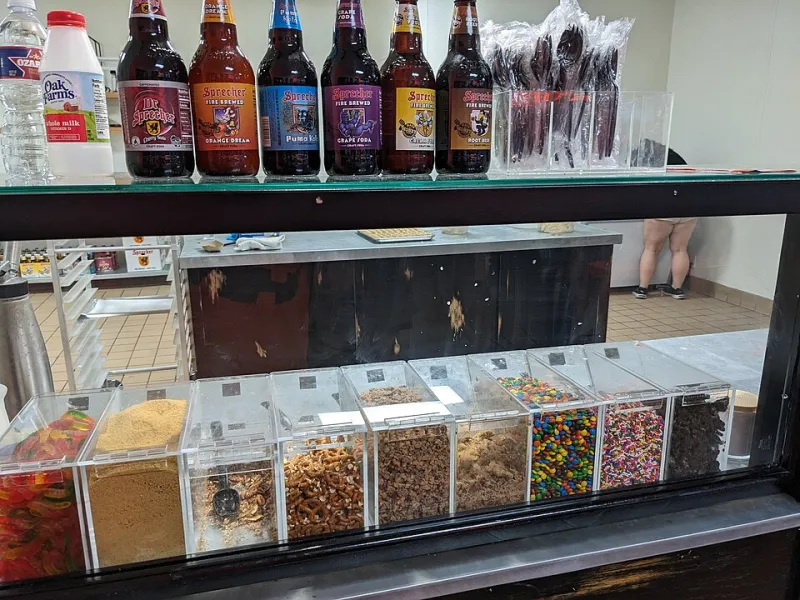
For craft soda producers, water is not merely a brewing medium — it is the primary carrier of carbonation and flavor. The choice of water source is therefore among the most consequential decisions a bottler makes.
Several prominent artisan soda brands have built their identities around specific water sources. In Vermont, one producer draws from a deep aquifer with exceptionally low mineral content, arguing that the near-pure water allows their botanical infusions to express themselves without interference. In contrast, a Texas-based bottler uses a naturally mineral-rich artesian spring, contending that the water's native character adds complexity to their ginger and citrus preparations.
Both positions are defensible. The relevant principle is intentionality: understanding what your water contributes and making deliberate choices accordingly.
"We test our source water every season," says Nathaniel Prue, founder of Ridgeline Sparkling Botanicals in Bend, Oregon. "The mineral content shifts slightly depending on snowpack and precipitation. We adjust our formulas to compensate. Most consumers don't know we do this, but they can taste the consistency."
Regional Terroir in the Glass
The French concept of terroir — the idea that a place's soil, climate, and geography impart distinctive characteristics to what is grown or produced there — has long been applied to wine. The craft beverage world is beginning to adopt a similar framework, and water is central to that conversation.
Some producers are now explicitly marketing their water sources as a point of differentiation, much as winemakers reference their vineyard's geology. This transparency appeals strongly to the contemporary consumer, who is increasingly interested in provenance and process across all categories of food and drink.
For the home enthusiast, the practical implications are worth considering. If you are preparing pour-over coffee, cold-brew tea, or a botanical mocktail at home, the water you use is shaping your result in ways that no amount of technique can fully override. Filtered water that removes chlorine and sediment without stripping all minerals is generally a sound starting point. For those wishing to go further, water-adjustment products designed for home brewers allow the addition of specific mineral salts to achieve a target profile.
Tasting With New Awareness
The goal of this exploration is not to introduce anxiety into the simple pleasure of a well-made drink. It is, rather, to deepen appreciation. When you next open a bottle from a craft producer who specifies their water source — or when you notice that your morning coffee tastes subtly different after a move to a new city — you will have the vocabulary and the understanding to engage with that experience more fully.
Water, in the end, is not the background of your beverage. It is its very foundation.